Orthogonally Engineered Bacteria Capture Metabolically Labeled Tumor Antigens to Improve the Systemic Immune Response in Irradiated Tumors
Abstract
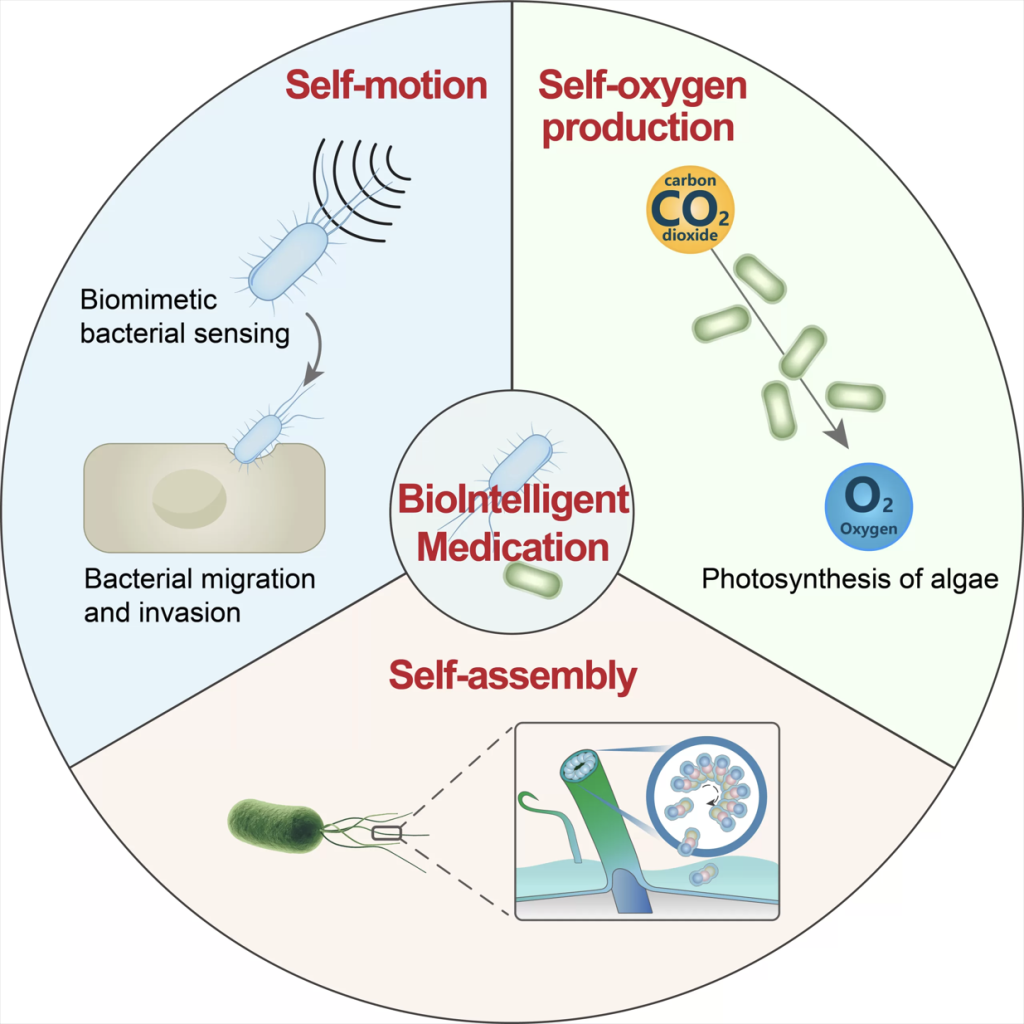
In situ vaccination is considered a promising cancer immunotherapy strategy to elicit a tumor-specific T cell response. Live bacteria effectively enhanced the immune response in irradiated tumors as it can activate multiple immune cells. However, the adaptive immune response remains low since bacteria lack the efficient delivery of antigen to dendritic cells (DCs). Here, we show that tumor antigens can be metabolically labeled with azido groups in situ, allowing for their specific capture by orthogonally engineered Salmonella via bioorthogonal chemistry. Subsequently, these antigens are efficiently delivered to DCs through the active movement of the bacteria. Intratumorally injected engineered bacteria captured the labeled antigens and improved their presentation by DCs. This increased the proportion of antigen-specific CD8+ T cells in tumors, further resulting in systemic antitumor effects in the bilateral melanoma mouse model. The antitumor effects were abrogated in Batf3–/– mice or after CD8+ T cell depletion, indicating that systemic antitumor effects were dependent on adaptive immune responses. Overall, our work presents a strategy combining bacterial engineering and antigen labeling, which may guide the development of in situ vaccines in the future.
In Situ Aggregated Nanomanganese Enhances Radiation-Induced Antitumor Immunity
Abstract
Radiosensitizers play a pivotal role in enhancing radiotherapy (RT). One of the challenges in RT is the limited accumulation of nanoradiosensitizers and the difficulty in activating antitumor immunity. Herein, a smart strategy was used to achieve in situ aggregation of nanomanganese adjuvants (MnAuNP-C&B) to enhance RT-induced antitumor immunity. The aggregated MnAuNP-C&B system overcomes the shortcomings of small-sized nanoparticles that easily flow back into blood vessels and diffuse into surrounding tissues, and it also prolongs the retention time of nanomanganese within cancer cells and tumors. The MnAuNP-C&B system significantly enhances the radiosensitization effect in RT. Additionally, the pH-responsive disassembly of MnAuNP-C&B triggers the release of Mn2+, further promoting RT-induced activation of the STING pathway and eliciting robust antitumor immunity. Overall, our study presents a smart strategy wherein in situ aggregation of nanomanganese effectively inhibits tumor growth through radiosensitization and the activation of antitumor immunity.